
Days Bygone - Castle Defense
FrivolitionAction
4.73.00K Reviews
- Version
- 2.9.2
- Installs
- 5.00M
- Age Rating
- Everyone 10+
Screenshots
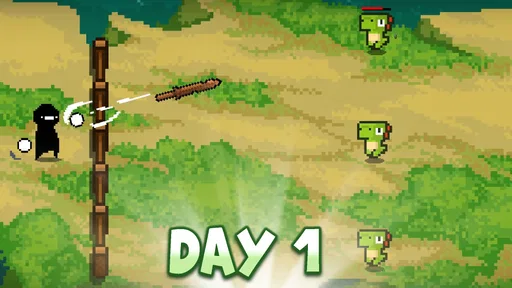
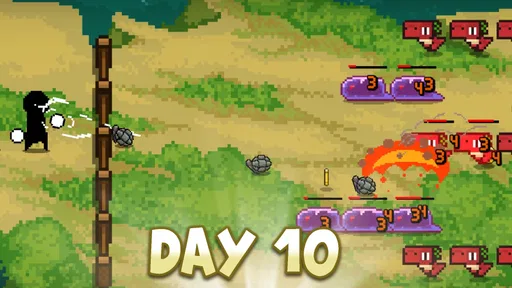
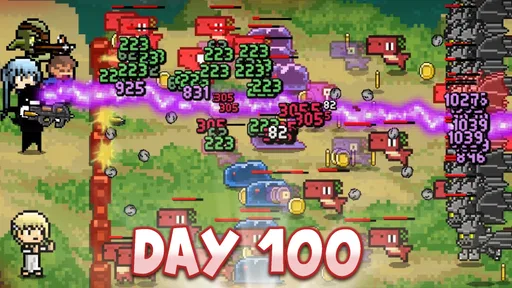
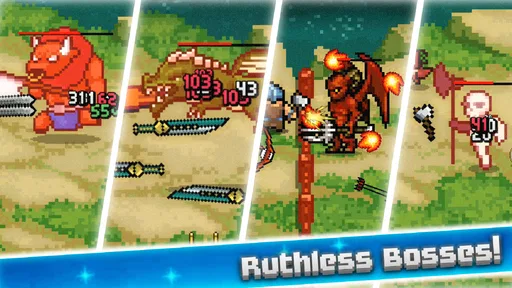
Our Review of Days Bygone - Castle Defense
 Analysis by Appyee
I spent time with Days Bygone - Castle Defense as a mobile action game built around defending a castle while steadily improving the tools and heroes available to you. Its basic appeal is easy to understand: you fight incoming enemies, strengthen your setup, recruit useful support, and return to earlier challenges with a better plan. What makes it more interesting than a quick arcade session is the way small decisions accumulate. A weapon upgrade that feels modest at first can change how comfortably you handle the next stretch, while a poorly timed purchase can leave you waiting for progress.
The game comes from Frivolition and is free to download, with optional purchases ranging from $0.99 to $49.99 per item. It is rated Everyone 10+, runs on Android 6.0 or later, and the current version is 2.9.2. Those details matter because this is not a premium one-time purchase: you can try the central loop without paying, but the presence of in-app purchases means patient players should decide early how they want to manage spending.
How the castle-defense loop feels in everyday play
My usual session starts with a simple question: can my current defense push a little farther than it did last time? The answer depends on more than tapping quickly. I look at the enemies reaching the castle, decide whether my current damage is enough, and then choose where the next improvement will have the greatest effect. That creates a pleasant rhythm of attempt, adjustment, reward, and another attempt.
The most useful way to approach the game is as a repeatable routine rather than a series of desperate pushes. I first let a run show me where the pressure begins. If enemies are reaching the castle because my basic offense is too weak, I prioritize the improvement that helps me remove threats sooner. If the problem is that a difficult wave overwhelms the defense despite decent damage, a hero or another form of support may be the better direction. This sounds obvious, but the game rewards players who diagnose the failure instead of spending resources automatically.
A realistic use case is a short evening break. I can play a few attempts, make one meaningful upgrade, and stop without needing to commit to a long uninterrupted session. That makes it suitable for people who enjoy gradual progress and repeated optimization. It is less suitable for someone looking for a story-heavy action game, a competitive multiplayer battle, or a completely hands-off idle experience. Although the progression can feel relaxed, the defense itself still asks me to pay attention to what is happening.
The free entry point is a genuine advantage. I can learn the systems and decide whether the loop suits me before spending anything. On the other hand, free-to-play progression requires discipline. The temptation to buy a shortcut is always part of this type of game, and a player who dislikes waiting or repeating earlier stages may find that friction more noticeable than someone who enjoys building strength gradually.
What to do during the first few sessions
Early on, I recommend avoiding the habit of spreading every resource across every available improvement. Concentrating on a practical core is easier to evaluate. When a run fails, I want to know whether the main problem was insufficient damage, weak support, or simply reaching a point where the current setup has outgrown its usefulness. If I improve several unrelated things at once, that lesson becomes harder to read.
I also treat each defeat as information. An enemy that survives long enough to reach the castle tells me something different from a wave that is cleared comfortably until a sudden spike. In the first case, direct offensive strength deserves attention. In the second, I look more closely at the timing and usefulness of my supporting heroes. This habit is more valuable than blindly repeating the same run and hoping the result changes.
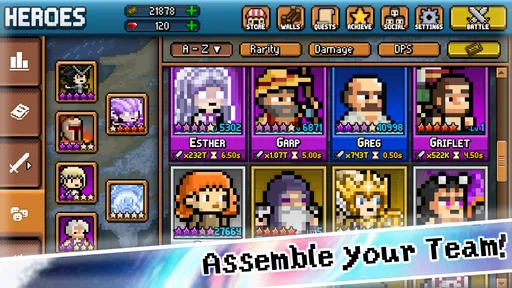
Recruiting heroes is not just a collection exercise for me. I think about what a hero contributes to the particular problem I am facing. A character that looks less exciting in isolation may be more useful when the rest of my setup already handles ordinary enemies well. The practical question is not “which hero is strongest?” but “which addition fixes the weakness I keep seeing?” That shift makes the roster feel like a tool rather than a checklist.
Settings and small habits worth checking
I make a point of checking the available settings before settling into regular play. Even when a game has a straightforward interface, small presentation or control choices can affect how comfortable repeated sessions feel. I prefer a layout that lets me see the castle, enemies, and important actions without visual clutter. If an option changes notifications, sound, or other interruptions, I adjust it to match whether I am playing casually or concentrating on a difficult push.
I also check that the game behaves well on my device before making it part of my daily routine. The minimum operating-system requirement is Android 6.0, but compatibility on paper is not the same as comfort in practice. Screen size, battery condition, and how smoothly the device handles repeated action all influence the experience. A player using an older phone should try a normal session before deciding that every slowdown comes from the game itself.
One useful habit is to avoid changing several settings and strategic choices at the same time. If I alter the interface, switch heroes, and spend all my resources in one visit, I lose the ability to tell which change helped. I prefer a controlled approach: adjust one practical detail, play enough to notice the effect, and then keep or reverse it. That is especially helpful for players who want to improve rather than simply pass time.
The age rating of Everyone 10+ makes the game approachable for a broad audience, but parents should still remember that optional purchases are present. I would not hand a device to a younger player with payment access left completely unprotected. The rating describes the intended content level; it does not remove the need for sensible purchase controls.
Faster patterns for making progress
Experienced play is less about frantic input and more about reducing wasted decisions. I try to enter a run with one goal. Sometimes that means testing how far the current defense can go without spending anything. Sometimes it means checking whether one upgrade changes the point where enemies begin to break through. A focused attempt gives me a clearer result than a run where I constantly react without a plan.
Another efficient pattern is to separate testing from commitment. If I am unsure whether a hero will solve a problem, I first observe the same type of difficult wave again and compare the result after the change. I do not assume that a higher-looking number automatically produces a better defense. The real test is whether the castle survives longer or whether the run becomes easier to control.
I find it helpful to spend rewards after a short review rather than immediately collecting and buying. That pause prevents emotional decisions after a frustrating defeat. If I lose narrowly, I ask whether one targeted improvement would change the outcome. If I lose badly, I consider whether I am trying to push beyond the sensible limit of the current setup. This distinction saves resources and reduces the feeling that every failed attempt demands a purchase.
For short sessions, I use a three-step pattern: play one run to observe, make one deliberate adjustment, and play again to verify it. It is simple, but it turns spare minutes into useful progress. For longer sessions, I add a second review after several attempts so that I do not keep repeating a strategy that has clearly stopped working.
The game also compares favorably with ordinary action games when I want progression to matter. In a purely reflex-based alternative, a failed attempt may mainly tell me that I reacted too slowly. Here, failure can reveal a structural weakness in my defense. However, players who prefer immediate controls and constant movement may find this slower planning layer less exciting than a conventional action title.
Where the progression starts to ask more from you
The central trade-off becomes clearer as the castle grows stronger. Early improvements can feel satisfying because they produce visible progress, but later advancement demands more patience and more careful resource choices. That is where the free-to-play structure becomes most relevant. I can continue without paying, yet the experience is better for me when I accept that not every session will produce a dramatic breakthrough.
Optional purchases are the main limitation I would discuss with a friend before recommending the game. The individual prices begin at $0.99 and reach $49.99, so the range is wide enough that spending can become significant if handled casually. I do not think buying is required to understand the game, but players who are uncomfortable with purchase prompts or progression systems built around waiting should approach it cautiously.
I would also skip this game if my priority were a polished, linear campaign with a clear ending. Its appeal lies in repeating the defense loop, improving a roster, and seeing how far the next attempt can go. That structure can be satisfying for a systems-minded player, but repetitive for someone who needs constant new environments, dialogue, or dramatic set pieces.
Another limit is that optimization can become personal rather than universal. The best choice for my current weakness may not be the best choice for another player at the same point, especially if our recruited heroes and upgrade priorities differ. That flexibility is good, but it means I cannot rely on a single permanent recipe. I have to keep observing the actual behavior of my own castle.
Who will get the most from it
I think the strongest audience is made up of players who enjoy incremental strategy inside an action framework. If you like checking a run, identifying the bottleneck, and making one improvement that changes the next attempt, the design has plenty to offer. It also works well for people who want a game that can be played in short bursts without abandoning longer-term goals.
It is a weaker match for anyone who wants a fully passive experience. The castle-defense format may sound automatic from a distance, but I get more from it when I watch the pressure points and make decisions with purpose. It is also not my first recommendation for players who dislike free-to-play economies, even though the game can be sampled without payment.
The scale of its audience suggests that the concept has found a substantial following: it has passed 5 million installs, with a 4.7 average from around 67 thousand ratings and about 3 thousand written reviews. I would not treat popularity as proof that every player will enjoy it, but those figures do match my impression that the progression loop is easy to pick up and has enough depth to keep committed players experimenting.
My verdict after learning the rhythm
Days Bygone - Castle Defense works best when I stop treating it as a game of constant speed and start treating it as a series of small engineering problems. The castle is the visible objective, but the real challenge is deciding which weakness deserves attention, which hero supports that decision, and when an upgrade is worth more than another attempt.
Frivolition has made a free action game that is approachable at the beginning and increasingly demanding in patience and judgment. I appreciate that I can play casually, yet still find room for repeatable habits such as controlled testing, focused spending, and comparing failures instead of merely replaying them. Those habits are what give the game more staying power than its short store summary suggests.
My recommendation is positive, with one important condition: enjoy gradual progress and set a spending boundary before you begin. If you want a compact castle-defense loop with heroes, gear improvement, and room to refine your routine, this is an easy one to try. If you want a premium experience without purchase pressure, a story campaign, or nonstop action, another option will probably suit you better. For me, the best part is the moment a previously impossible wave becomes manageable—not because I tapped faster, but because I finally understood what my defense was missing.
Verdict
Strengths of Days Bygone - Castle Defense
- Simple controls make it easy to start playing immediately.
- Offline play lets you progress without a constant internet connection.
- Frequent events add variety beyond the main defense stages.
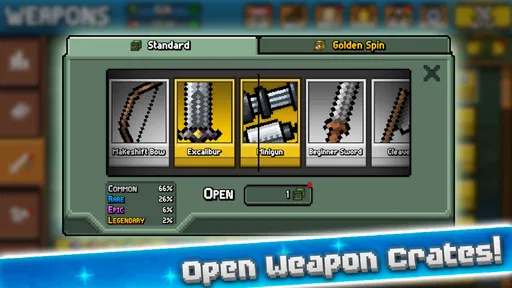
- Hero and weapon choices support different play styles.
- The pixel-art presentation runs well on many older devices.
Limitations of Days Bygone - Castle Defense
- Progress can slow noticeably without regular upgrades and grinding.
- Random loot may make obtaining specific equipment unpredictable.
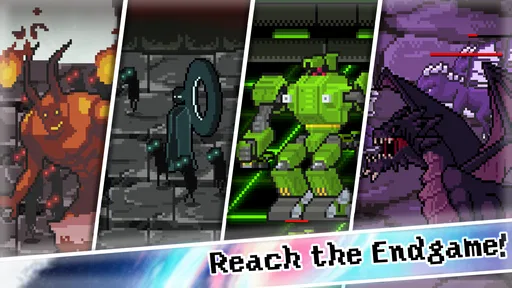
- Later waves can feel repetitive despite new enemies and bosses.
- Some rewards and features require watching optional advertisements.
- The large number of upgrade systems may overwhelm new players.
Similar Picks in This Category
View All
Temple Run 2: Endless Escape
Imangi Studios4.1

PUBG MOBILE
Level Infinite4.3

Free Fire: 9th Anniversary
GARENA INTERNATIONAL I4.4

Talking Tom: Hero Dash Run
Outfit7 Limited4.3

slither.io
Lowtech Studios3.9

Sniper 3D:Gun Shooting Games
Wildlife Studios4.6
Frequently Asked Questions
What is Days Bygone - Castle Defense?
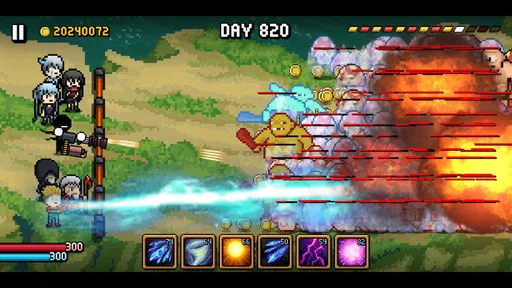
Days Bygone - Castle Defense is a side-scrolling tower defense and idle RPG where you protect your castle from increasingly powerful waves of enemies. You can deploy heroes, upgrade weapons, unlock spells, and improve your fortress between battles. The game combines active combat with progression systems that continue helping you grow even when you are not constantly playing.
Is Days Bygone - Castle Defense free to download and play?
Yes, Days Bygone - Castle Defense is free to download and play on supported mobile devices. However, it includes optional in-app purchases and advertising features that may provide extra resources, bonuses, or convenience. You can make progress without paying, although upgrading heroes, weapons, and other systems may require patience and regular participation, especially during later stages.
Does the game require an internet connection?
Days Bygone - Castle Defense may require an internet connection for certain features, including advertisements, cloud-related services, account synchronization, updates, and purchases. Some gameplay elements may work offline, but availability can vary depending on the device and version. For the most reliable experience, it is best to launch the game while connected to a stable Wi-Fi or mobile data network.
What kind of gameplay and progression does it offer?
The main gameplay involves defending your castle against waves of enemies by using attacks, heroes, spells, and strategic upgrades. After each attempt, you can spend earned resources to improve damage, health, abilities, and equipment. The game also includes idle rewards and long-term progression, so returning regularly is useful even when a particular stage becomes difficult.
Is Days Bygone - Castle Defense suitable for casual players?
Yes, the game is generally suitable for casual players because battles are easy to start, sessions can be relatively short, and idle rewards help you make progress between play periods. Nevertheless, the large number of upgrades, heroes, currencies, and timed activities can feel complex at first. Players who enjoy gradual improvement and repeated experimentation will likely get the most from it.
Play our best games!


